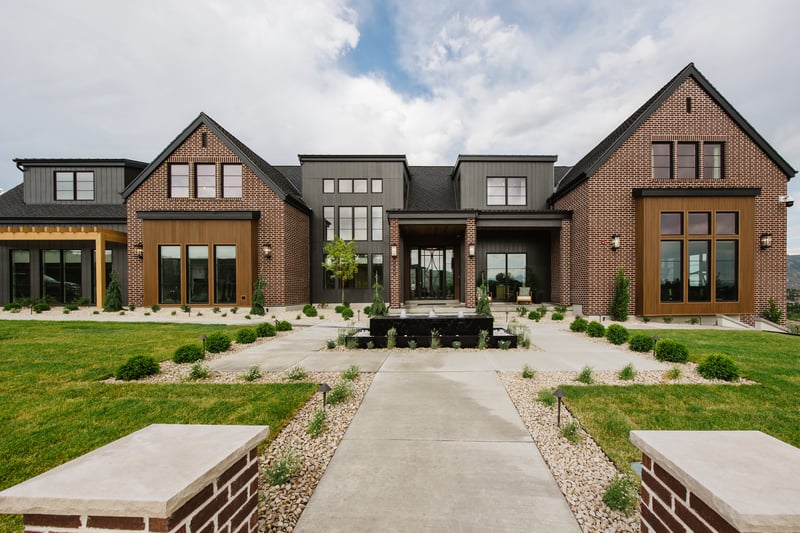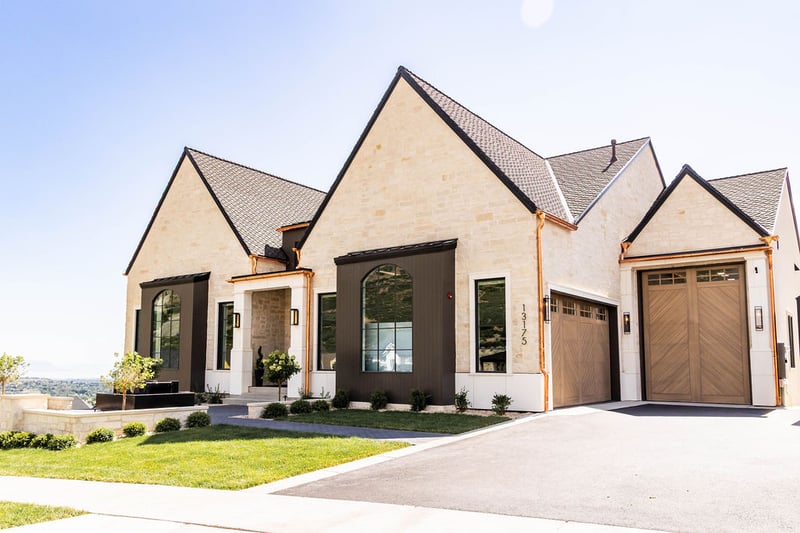

Building a custom home is one of the biggest projects a family will ever take on. It is also one of the most rewarding, if you know the steps before you start. This guide walks through how to build a custom home in Utah, in the order the decisions usually come: budget and financing, land, your builder, design, permits, construction and move-in. Along the way we note where families most often lose time or money, and how to avoid it.
Step 1: Set an all-in budget and plan how you will pay for it
Start with the total number, not the price per square foot. An all-in budget for a custom home includes the lot, architectural and interior design, engineering, permits and impact fees, construction, landscaping, and furnishings, plus a contingency for price changes and decisions you make along the way. Decide early which number you do not want to go over, and share it with your builder and designer from the first meeting. Our guide to what it costs to build a luxury custom home in Utah breaks down the main cost categories.
If you plan to finance the build, talk to a lender before you buy land. Many families use a construction-to-permanent loan. According to Bankrate, this type of loan has a single closing, pays the builder in draws as phases of work are completed and inspected, often requires only interest payments during construction, and converts to a regular mortgage when the home is finished. Ask your lender how draws are scheduled and inspected, because that timing affects how smoothly your project runs.
Step 2: Find the right lot, and review it before you buy
The lot shapes almost everything about your home: its size, its layout, its views and a large share of its cost. Two lots at the same price can lead to very different budgets once you account for slope, soil, utilities and access.
Before you make an offer, review:
- Zoning and setbacks. How large a home, and how tall, the city allows on the lot.
- HOA and architectural rules. Many Utah communities have design guidelines and a review committee that must approve your plans.
- Utilities. Whether water, sewer, power and gas reach the lot, and what it costs to connect.
- Slope and soils. Steep or hillside lots can need extra excavation, retaining walls and engineering.
- Views, sun and privacy. Where the light comes from and what you will see from the main rooms.
The best time to bring in a builder is before you close on the land. If you already own a lot, or have one under contract, see how we help families build on their own lot in Utah.
Step 3: Choose your builder early
Many families wait until the plans are finished to talk to builders. Bringing a builder in at the start usually saves time and money, because the builder can price ideas while they are still sketches and flag lot or design issues before they become expensive changes.
When you compare builders, check three things first:
- License. Confirm the builder holds an active Utah contractor license using the state's Division of Professional Licensing license lookup.
- Homes like yours. Walk homes the builder has completed at a similar size and level of finish, and talk to past clients.
- How the builder is paid. Many luxury builders charge cost-plus, a percentage of everything spent, so their fee grows as the home gets more expensive. E Builders uses a fixed builder fee that is set before construction begins, so our interests stay tied to your budget.
Step 4: Design your home (about 3 to 6 months)
Design is where your home takes shape: the floor plan, the exterior, how the house sits on the lot, and the interior design. You can work with the builder's design partners or bring your own architect and interior designer. Either way, the builder should be in the room, pricing the plan as it develops so the design and the budget grow together.
Plan on about 3 to 6 months for design. Larger homes, hillside lots and detailed interiors tend to fall at the longer end. This is also the cheapest time to change your mind: moving a wall on paper costs far less than moving it during framing.
Step 5: Make your selections and confirm the budget
Once the plans are close, you choose materials, finishes, lighting, plumbing fixtures and appliances, usually with your interior designer. Trade partners then bid the work, and the bids roll up into an all-in construction budget. A good budget at this stage includes a contingency line for price increases, so a rise in material costs does not derail the project.
Making most of your selections before construction starts keeps the schedule moving. Decisions left for later can hold up trades on site while you wait for an order to arrive.
Step 6: Permits, HOA review and impact fees
Every new home in Utah needs a building permit from the city or county where it is built. Utah sets a statewide construction code based on the International Residential Code, with state amendments, under Utah Code 15A-2-103. Your local building department reviews the plans against that code and inspects the work as it goes.
Plan for building permit fees and impact fees in your budget. Impact fees are one-time charges cities place on new development to help pay for the public facilities it uses. A Utah Legislature research summary explains that they can fund things like water, wastewater, storm drains, roads, parks and public safety facilities, and that they are governed by the state's Impact Fees Act. Amounts vary by city, so ask for the current fee schedule early.
If your lot is in an HOA, the architectural review committee will usually need to approve your plans before you can build. Approval times vary, so build that review into your schedule.
Step 7: Construction (about 12 to 20 months)
For most custom homes we build, construction takes 12 to 16 months for homes under 10,000 square feet and 16 to 20 months for larger homes. Our post on the timeline to build a custom home in Utah covers what affects the schedule.
During construction, ask for a clear rhythm of communication. E Builders holds weekly meetings with every client and reviews the budget with you every month, so you always know where the project stands and what decisions are coming up.
One Utah detail worth knowing: contractors and suppliers who work on your home can file a preliminary notice on the state's State Construction Registry to protect their lien rights. As the owner, you can look up who has filed on your property, which is a useful way to see which companies are working on your home.
Step 8: Final inspections, walkthrough and warranty
Near the end, the city completes its final inspections and the builder finishes punch-list items. Then you walk the home with the builder to review every system and finish, learn how things work, and go over warranties and care.
Ask every builder what warranty they offer. Every E Builders home includes a 1-year warranty, with the option to add a 10-year warranty.
How long does it take to build a custom home in Utah, start to finish?
Add the phases together and most custom homes take about a year and a half to a little over two years from the start of design to move-in: about 3 to 6 months of design, plus permit and HOA review time, plus 12 to 20 months of construction. Time spent finding and buying a lot comes before all of that. Starting design early, and making selections before construction begins, are the two most reliable ways to keep the schedule on track. You can see each stage of how we work on our custom home process page.
Frequently asked questions
How much does it cost to build a custom home in Utah?
It depends on the lot, the size of the home and the level of finish, and building costs change over time, so the most useful number is your own all-in budget. Permit and impact fees are set by each city. Our cost guide breaks down the main categories.
Should I buy land before I talk to a builder?
Talk to a builder first if you can. A builder can review a lot for zoning, slope, utilities and HOA rules before you buy, which helps you avoid a lot that costs far more to build on than you expected.
Can I use my own architect or designer?
Yes. You can work with your own architect and interior designer or with the builder's design partners. What matters most is that the builder is involved early to price the design as it develops.
What is a fixed builder fee?
A fixed builder fee is the builder's fee for the whole project, set before construction begins. Unlike cost-plus, it does not grow as the home's cost grows, so the builder is aligned with your budget.
Ready to start planning your custom home?
E Builders has built custom homes in Northern Utah since 2006, serving Utah, Salt Lake, Summit, Wasatch, Davis, Weber and Morgan counties. Whether you have a lot picked out or are just starting to plan, we are happy to walk you through the steps for your project. See more about our luxury custom homes, then book a free consultation or call us at 801-331-6908.